
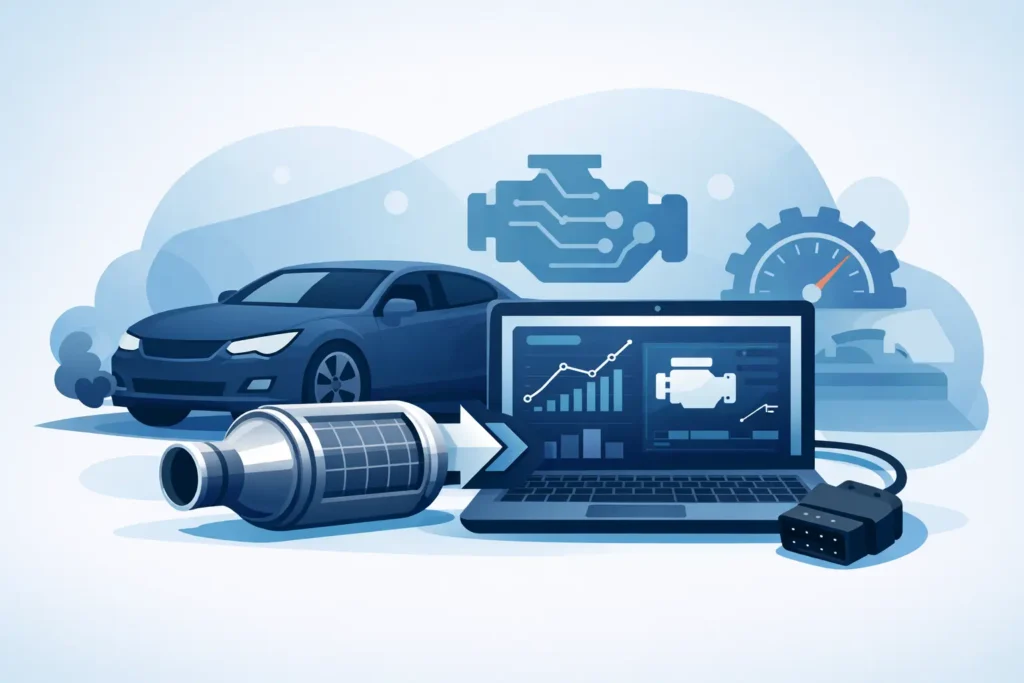
A workshop usually finds out the hard way when a bad DPF solution lands on the bench. The vehicle comes back with regeneration faults, limp mode, smoke issues, or a dashboard full of warning lights. That is why dpf off tuning files are not just another checkbox request. For a professional tuner, they are a test of calibration quality, diagnostic understanding, and supplier reliability.
In this area, speed matters, but accuracy matters more. A file that switches off one map and ignores the rest is not a commercial solution. If you are running a tuning business, every DPF-related job affects your reputation, your workshop time, and your customer confidence. The difference between a usable file and a tested file is often the difference between a clean handover and an expensive comeback.
What professional tuners expect from dpf off tuning files
At workshop level, the expectation is simple. The vehicle should operate correctly after modification, with no recurring DTC issues, no forced regeneration behavior, and no unstable torque management side effects. That sounds obvious, but many files in the market are still built around partial solutions.
A proper DPF solution starts with ECU strategy knowledge. Different platforms manage soot load, pressure monitoring, exhaust temperature models, and service logic in different ways. Some ECUs need multiple switches, some require recalibration of related maps, and some demand close attention to how the DPF strategy interacts with EGR, lambda control, or AdBlue systems. If a supplier treats all platforms the same, the file quality will show it.
Professional tuners also expect consistency. If you are handling volume, you cannot afford to guess whether the next SID, EDC17, Delphi, or Denso solution will be clean. You need predictable work, fast turnaround, and support that understands how the vehicle behaves in the real world, not only in the hex view.
Why low-quality DPF solutions create expensive problems
The biggest issue with poor dpf off tuning files is not that they fail instantly. It is that they often fail later, after the vehicle leaves the workshop. That is the worst-case scenario for any tuner because the technical problem becomes a business problem.
A low-quality file may suppress obvious fault codes while leaving regeneration logic active in the background. On some vehicles, that can lead to fuel dilution, cooling fan behavior, exhaust temperature anomalies, or torque limitation requests that seem unrelated at first. On others, the file may remove a warning light but leave readiness or monitoring logic in a state that triggers faults after a drive cycle.
There is also the issue of file safety. Poorly modified checksums, rough manual edits, or generic automated solutions can introduce instability into the software itself. Even if the car starts and drives, that does not mean the calibration work is correct.
For a workshop, the cost adds up quickly. Extra diagnostics, repeat flashing, customer calls, road testing, and loss of trust all eat into margin. That is why serious businesses look beyond the lowest file price. They look for tested solutions backed by people who understand platform behavior.
What separates a tested file from a generic file
A tested file is built around known ECU behavior, not assumptions. That means the calibration has been checked on the relevant system, the solution has been validated in practice, and the editor understands which functions must be addressed together.
This is especially important when a vehicle arrives with combined requests. DPF off is often paired with EGR off, AdBlue off, or stage tuning. In those cases, the calibration work has to remain balanced. You cannot push torque, change boost strategy, and remove emissions functions independently without considering how they interact.
A tested file also reflects workshop reality. Not every car arrives in perfect condition. Some have pre-existing sensor issues, partial hardware changes, or a history of failed regeneration attempts. A supplier with hands-on tuning experience will usually spot when a file request needs a closer look instead of a fast automated answer.
That support matters. A professional file service should be able to review the original read, assess the ECU type, and deliver a result that makes sense for the vehicle and the job. If there are limitations, they should say so clearly. That is a stronger service than pretending every solution is simple.
Turnaround speed matters, but only when the file is right
Every workshop wants fast delivery. Vehicles take up space, technicians wait on files, and customers expect a timeline. But in DPF work, speed has value only when the file is complete.
A 15-minute turnaround is useful if the file arrives calibrated correctly and backed by technical support. It is useless if the workshop spends the next two hours solving preventable issues. That is why professional tuners usually evaluate a supplier on three things at once: turnaround time, file accuracy, and response quality when something unusual appears.
This is where a true tuning partner stands apart from a bulk reseller. A partner understands that your job does not end at file download. It ends when the vehicle leaves the workshop operating as expected. If there is an issue with reading method, tool compatibility, CVN concern, or related DTC behavior, you need someone who can speak your language and move fast.
How workshops should assess a DPF file supplier
If you are sourcing dpf off tuning files regularly, the right question is not just, Can they do this ECU? The better question is, How do they handle complexity when the job is not routine?
Start with testing standards. Ask whether the files are validated on real vehicles, whether the supplier understands platform-specific behavior, and whether they build solutions manually where needed rather than relying blindly on software automation. Some ECUs tolerate generic handling. Others absolutely do not.
Then look at operational fit. Can they support your tools and workflow as a slave or master tuner? Can they work from original files cleanly and return modified files quickly? Do they have access to deeper database resources when a job falls outside standard patterns? A supplier that helps you scale is more valuable than one that only fills basic orders.
Support quality is another dividing line. If a vehicle shows unexpected behavior after flashing, you need direct technical communication, not generic replies. Workshops trust suppliers who can review logs, discuss ECU strategy, and advise on the next diagnostic step when necessary.
That is one reason many professionals prefer providers with real workshop and dyno experience. The calibration is better grounded, and the support is usually more practical.
DPF solutions are rarely isolated jobs
In daily workshop work, DPF requests often sit inside a broader commercial job. The customer may want better drivability, a small power increase, EGR removal, or a full solution package on a commercial vehicle. That changes the calibration approach.
For example, if torque delivery is adjusted, smoke control and air mass strategy still need to remain coherent. If EGR is removed at the same time, airflow modeling and related diagnostics can require additional attention. If AdBlue functions are also involved, the logic chain becomes more complex again.
This is why serious file development is rarely about one switch. It is about building a complete, stable calibration package that works on that ECU, in that vehicle, with that hardware condition. A supplier that understands combined jobs will save a workshop time and protect margins over the long term.
When education matters as much as file supply
Not every tuning business is at the same stage. Some workshops already have deep bench experience and need a reliable extension of their capacity. Others are growing fast and need more support around process, tool use, and platform recognition.
In both cases, education has value. A supplier that helps dealers understand what they are requesting, what to check before flashing, and how to spot related faults makes the whole business stronger. Better input usually leads to better output.
That is where a company like Lion Chiptuning Files fits naturally for many professionals. The value is not only in delivering modified files quickly. It is in combining tested solutions, practical support, and workshop-level understanding so tuners can work faster with less risk.
The commercial value of getting DPF jobs right
A clean DPF solution protects more than a single invoice. It protects workshop flow. It protects customer trust. It protects the time your technicians could spend on the next profitable job instead of reopening the last one.
For growing tuning businesses, that matters. Reliable file supply improves consistency, and consistency is what allows a shop to scale. You can market performance all day, but repeat business usually comes from vehicles that leave right the first time.
If you are building a serious operation, choose file support the same way you choose tools – based on accuracy, speed, and proven behavior under real workshop pressure. The best suppliers do not just send files. They make your jobs easier to finish properly.