
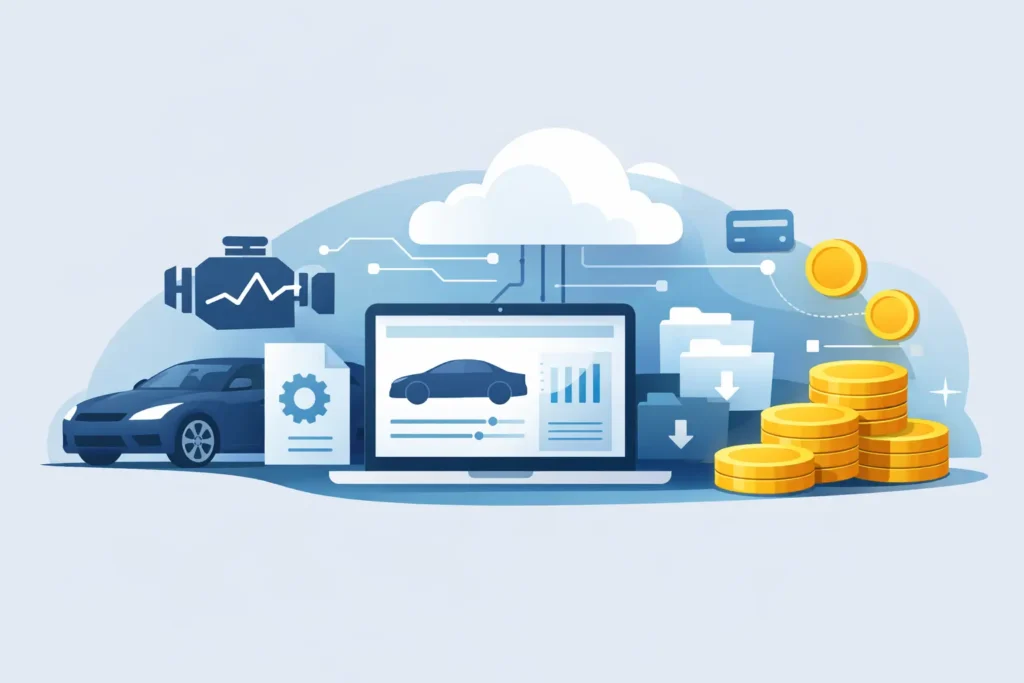
A workshop is only as fast as its slowest job. In ECU remapping, that slowdown usually starts when file delivery is inconsistent, pricing is unclear, or support disappears the moment a request gets technical. That is exactly why a credit based tuning file portal has become the practical model for serious tuners who need speed, control, and dependable file supply without turning every order into a back-and-forth quote.
For a professional tuner, the value is not just convenience. It is workflow. When you can upload an original file, choose the required modification, pay with credits already sitting in your account, and receive a calibrated solution quickly, the shop runs differently. Cars move through the bay faster, staff spend less time chasing admin, and customers get realistic delivery times instead of vague promises.
What a credit based tuning file portal actually changes
At a basic level, a portal replaces manual ordering with a structured process. But the real difference is what happens behind that process. Instead of negotiating pricing per file or waiting on payment confirmation before work even begins, the credit system removes friction from the transaction.
That matters in a tuning business because demand is rarely evenly spaced. One day is a standard Stage 1 queue. The next day brings a diesel with DPF issues, an AdBlue request, a gearbox file, and a customer asking for same-day completion. A credit based tuning file portal gives the workshop a way to keep ordering without stopping to handle every small commercial step in real time.
It also creates predictability. If each service type has a clear credit cost, margins are easier to calculate. You know what the file costs before the car enters the bay. That makes quoting cleaner, especially for dealers and resellers handling volume.
Why credits work better than one-off payment requests
A lot of tuners start by buying files one at a time. That can work at low volume, but it creates drag as the business grows. Separate invoices, separate approvals, separate payment checks – it all adds time where there should be none.
Credits solve that by turning purchasing into a prepared resource instead of a repeated task. You load the account, then use it when needed. For a busy shop, this is not a small admin improvement. It is a capacity improvement.
There is also a cash flow angle, and this is where the trade-off needs to be honest. Prepaid credits are efficient if you are consistently ordering files. If you only request a file occasionally, holding account balance may feel less flexible than paying job by job. But for workshops doing regular tuning work, the benefit is usually obvious. Faster ordering and fewer interruptions are worth more than the minor loss of payment-by-payment flexibility.
A good portal makes that value even clearer by showing account balance, file history, request status, and service categories in one place. You are not guessing what has been ordered or what it cost. You are running a trackable process.
The best credit based tuning file portal is built for workshop speed
Not every portal helps the business equally. Some are just upload forms with a wallet attached. A professional system should support the way real tuners work under pressure.
Fast turnaround is the first requirement. If the platform is credit-based but the file team still responds slowly, the business case weakens. The portal only works when commercial speed and technical delivery speed match each other.
The second requirement is technical depth. A workshop does not need a polished dashboard if the delivered calibration is generic, inconsistent, or unsupported. Tested solutions matter more than interface design. When files are dyno-tested, checked by experienced engineers, and backed by technical support, the portal becomes more than a buying tool. It becomes part of the shop’s production system.
The third requirement is compatibility with different business models. Some customers operate as slave tool users and need dependable support around that structure. Others work at master level and expect deeper access, more custom requests, and integration with broader tuning resources such as EVC and WINOLS workflows. A serious portal should serve both without making either group feel boxed in.
Where professional tuners gain the most value
The biggest advantage shows up when volume and complexity increase together. If your shop only handles simple remaps, any file supply method may seem acceptable for a while. But once you are booking multiple cars a day, handling varied ECU types, and offering solutions beyond basic power upgrades, process quality starts affecting profit.
That is where a portal earns its place. It reduces waiting between diagnosis and action. It keeps service moving when the front desk is busy. It gives technicians and business owners a repeatable ordering path that does not depend on someone manually chasing the file provider every time.
It also supports standardization across teams. If multiple staff members can submit requests through the same structure, the business becomes less dependent on one person knowing how to phrase every file request. That is useful for growing workshops, dealer networks, and tuning businesses trying to expand beyond founder-led operations.
For newer businesses, the benefit is slightly different. A portal with credits can lower the barrier to acting like an established shop. Instead of building an in-house calibration department from day one, you can offer professional tuning services while relying on tested external file support. That only works if the supplier behaves like a technical partner, not a faceless reseller.
Support is what separates a portal from a file vending system
This is where many providers fall short. They talk about automation, but tuning is not a pure automation business. Vehicles have histories, hardware changes, software irregularities, and market-specific differences. Sooner or later, a request becomes more complex than a dropdown menu.
When that happens, support quality matters more than portal design. You need direct answers, practical judgment, and people who understand what is happening in the workshop, not just on a screen. A supplier with hands-on tuning experience can spot issues earlier, recommend safer solutions, and help avoid costly rework.
That is especially relevant for services involving EGR, DPF, and AdBlue modifications, or for applications where vehicle condition and software behavior can vary. There is no value in fast file delivery if the file is not properly considered. Speed is only useful when it is tied to calibration discipline.
This is also why many professional tuners prefer a partner model. A company like Lion Chiptuning Files is not positioned as a generic file warehouse. The strength comes from combining portal efficiency with tested files, workshop-level understanding, and direct technical backup when a job needs real attention.
Choosing a credit based tuning file portal without creating new problems
The right question is not simply whether the portal uses credits. The right question is whether the full system helps your shop deliver more work with less risk.
Look at turnaround times, but also look at consistency. Review the range of supported solutions and whether those solutions are validated in real operating conditions. Check if the provider can support both day-to-day volume and awkward edge cases. If your business is growing, consider whether the portal structure will still work when your file count doubles.
You should also think about transparency. Can you easily understand what each service costs in credits? Can you track past jobs and account usage? Can your staff use the system without repeated training or side messages to clarify the process? Good infrastructure should reduce confusion, not move it to a different screen.
There is no perfect model for every workshop. Some businesses eventually bring part of the calibration process in-house. Others stay hybrid and outsource selectively. But even then, a credit based tuning file portal can remain the fastest way to handle overflow, specialist requests, or dealer-level scaling without adding internal bottlenecks.
The shops that grow steadily are rarely the ones doing everything manually. They are the ones building reliable systems around tested technical work. If your file supply process still depends on delays, fragmented payments, and inconsistent support, fixing that process may improve output faster than buying another tool. A stronger workflow usually shows up on the dyno, at the service desk, and in your monthly numbers.